
Finding the best time to visit Tasman Glacier
The best time to visit Tasman Glacier starts with choosing an activity. A public viewpoint walk, a helicopter flight, a guided ice walk and a lake excursion each have different requirements. Daily conditions help determine whether the planned experience will run. Decide what matters most, then build the itinerary around access, the activity meeting point and room for a change of plan.
For flight-based visits, a flexible place in the itinerary is useful. Leave space around the booking instead of making a long arrival drive, a flight and a fixed onward connection depend on one another. Compare scenic flights with guided glacier walks before choosing dates. A scenic landing and a guided walk on the ice are different experiences, even when both involve a helicopter.

Tasman Glacier weather and daily decisions
MetService provides a forecast page for Aoraki/Mount Cook National Park. Use that forecast alongside DOC access information and the day-specific Avalanche Advisory. DOC warns that avalanches can occur in any season; a summer date is not a substitute for checking the conditions relevant to the planned route. Follow the activity team’s instructions for a booked flight or guided outing.
The fifty-minute helicopter option featured here combines a scenic flight, a glacier landing and views of Aoraki/Mount Cook and the Southern Alps. It starts at 81 Bowen Drive. The landing site depends on the operation, and a specific Tasman landing is not promised. Food, drinks and hotel pickup and drop-off are excluded. Weather governs whether flying can proceed, so keep the approach journey separate from assumptions about departure.
A weather-dependent flight
This glacier flight is an option when conditions permit.
Hand-picked tours, booked through GetYourGuide. Prices are indicative starting prices in US dollars (as of October 2026). Tap a tour for live availability and the current price in your currency.
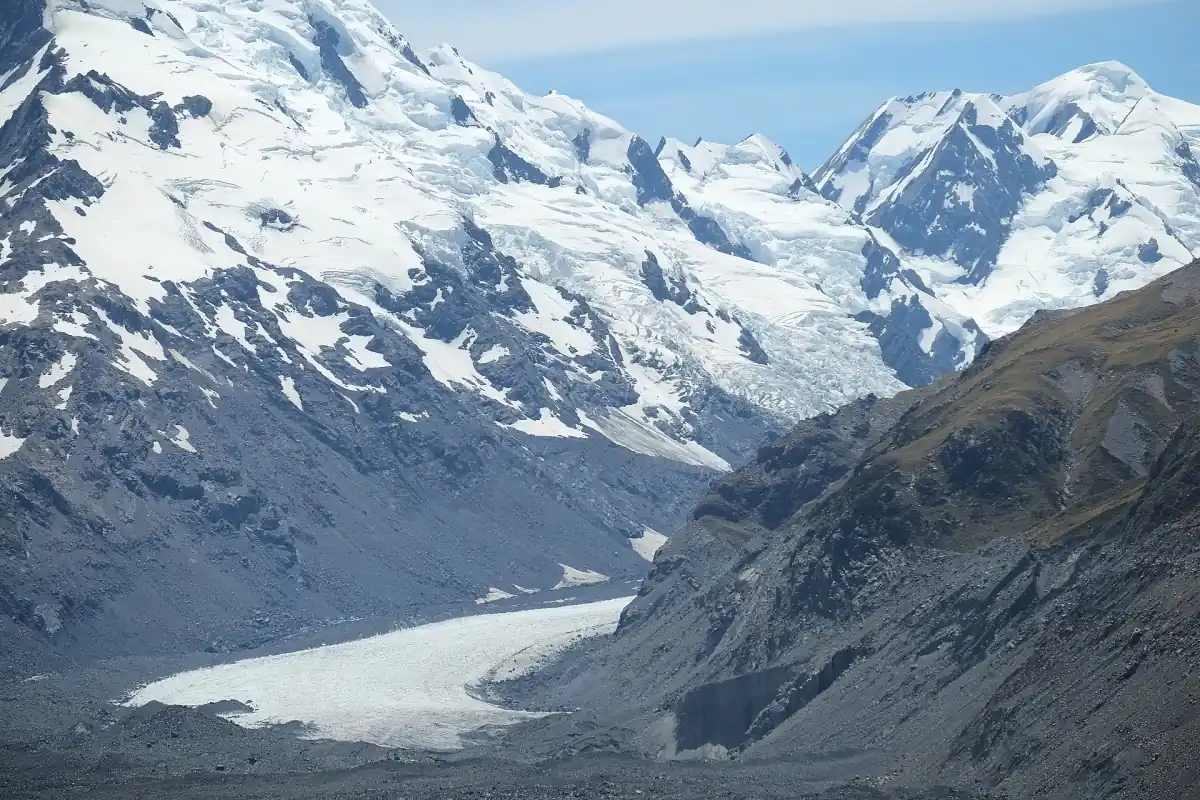
A weather-dependent glacier flight
This fifty-minute flight includes a glacier landing and Southern Alps views; leave flexibility for flying conditions and the chosen landing site.
Winter road access from June to September
DOC identifies June to September as a period when snowfall can restrict the road approach. The route uses SH8 and SH80, with Tasman Valley Road for the public walking area. Check the NZTA Journey Planner before setting off and DOC information for local access. These checks matter whichever overnight base is chosen; booking accommodation does not settle the road conditions.
Time the journey to the actual destination. DOC estimates approximately ten minutes from Mount Cook Village to Tasman Valley car park, fifty minutes from Twizel and one hour thirty minutes from Tekapo. The longer city-to-national-park estimates are different again. The arrival guide explains those distinctions. Add preparation and check-in time separately, particularly when an early tour follows a drive from outside the park.
Heli-ski and the regular winter window
The regional heli-ski operator describes July to September as its usual season, with suitable flying weather required. This is for fit skiers and snowboarders with strong intermediate ability, rather than beginners. Weather, snow stability and participant ability influence the day. The programme covers several mountain ranges and glaciers in the Mount Cook area, so a descent on the Tasman Glacier is not assured.
Safety instruction includes use of an avalanche transceiver before the flight, and guests and guides carry transceivers. Briefings are in English; someone who needs translation requires a translating companion. Equipment planning also matters: the operator describes ski equipment hire but no snowboard equipment hire. Arrange the appropriate equipment and ability match for that separate activity. A scenic flight booking is a different purchase and does not include heli-skiing.
Lake visits and public walking alternatives
For a guided visit on Tasman Lake, plan around an offered departure for the chosen date and the weather and lake conditions. Avoid treating a general seasonal idea as a promise of operation. The boat experience includes a walking approach, so clothing, footwear and the group’s ability matter alongside the date. Read the lake guide for the distinct arrangements for a guided boat outing.
The public viewpoint is a land-based alternative, with its own access and walking demands. DOC describes the View Track as a return route with more than three hundred steps. The lake and river route provides a different walking choice. Neither public path is an approach onto the glacier itself. Enter the ice or go onto the glacier lake only with a guide; stay out of the water and off icebergs and frozen lake surfaces.
Prepare for the visit you actually booked
Use the overnight base to organise water, clothing and offline instructions. DOC states that the Tasman starting point has no drinking water or mobile reception. Car park toilets close in winter and can also be unavailable when summer water supplies are short. The visitor centre is an alternative facility. Carry rubbish back out instead of expecting bins at the walking start.
An adaptable schedule is more useful than a claim that one month guarantees the view. Choose a suitable walking or guided activity, keep transport and check-in realistic, and make the daily weather decision close to the visit. The accommodation location guide can help reduce the approach drive when the activity starts locally. Keep the plan useful even if the main flight needs another time.
Questions before your visit
Which month guarantees a clear flight?
Build in flexibility rather than relying on a guaranteed clear day. The forecast and the flight team’s operating decision matter for the actual departure.
When is heli-skiing usually offered?
The operator gives July to September as the regular window, subject to flying and snow conditions. Strong intermediate ability and fitness are required.
Can I walk onto a frozen lake in winter?
Stay off frozen lakes and icebergs and out of the water. Choose the public land paths or a guided glacier or lake experience appropriate to conditions.